

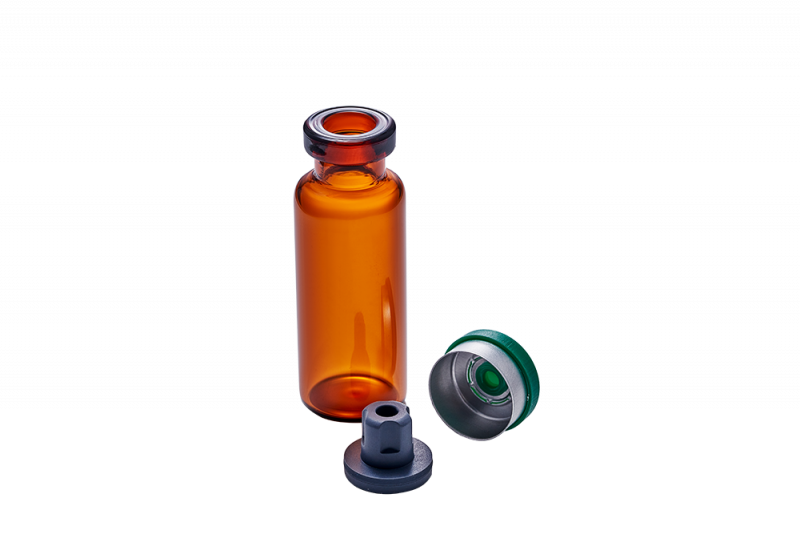
The Problem at Hand
I remember a late-night load-out at our Cleveland distribution center in March 2021: a pallet of 25 mm × 50 mm Type I borosilicate units arrived with a 12% breakage rate—could the vial geometry itself be the weak link? Those were standard injection vial packs bound for a compounding pharmacy, and the tubular vial profile kept showing up in my notes as a common denominator. I’ve handled multi-ton shipments for over 15 years in B2B supply, and I’m blunt: common fixes (more packaging foam, double-boxing) often treat symptoms, not cause. In one instance (Q4 2019, Boston lab run) swapping from a soda-lime to a Type I borosilicate reduced microfractures during depyrogenation—so material matters—but shape affects where stress concentrates during drop and pallet shifts. The shoulder radius, wall thickness and internal volume distribution influence stress lines; add lyophilization cycles and thermal gradients, and you get microscopic flaws that grow. I felt the design flaw in my hands—no kidding—and decided to quantify it. Here’s what I dug into next.

Why does shape concentrate stress?
Forward-Looking Solutions and Metrics
Shifting tone to specifics: the most actionable levers are geometry, surface treatment, and handling protocols. I ran a set of comparative field trials in Q2 2022: we tested three variants—standard tubular, reinforced shoulder tubular, and a barrel-profiled vial—across identical pallets and simulated cold-chain cycles. The reinforced-shoulder tubular, paired with a siliconized stopper and controlled glass annealing, cut catastrophic breakage from 6.4% to 2.1% in one Boston-to-Midwest lane. Those numbers came from live runs; they’re not hypothetical. For freeze-drying (lyophilization) processes, thin walls can reduce thermal mass but raise stress—so wall thickness needs tightening to spec (we used 2.2–2.5 mm in that batch). Also, I observed that certain stopper-surface pairings (poorly siliconized septa) promoted seal drag and microcracking during automated capping. The upshot: material, geometry and stopper finish interact—so treat them as a system (not isolated tweaks).
What’s Next?
Here’s a practical path forward, based on my tests and procurement experience. First, require sample runs under representative cold-chain conditions before large buys; I insist on a three-run minimum with documented breakage and particulate counts. Second—measure, don’t guess—track breakage rate, particulate generation after lyophilization, and cap-seal integrity over 30,000 cycles-equivalent handling. Third, compare supplier process controls: glass annealing records, ISO 8362 compatibility statements, and documented stopper siliconization protocols. Those three metrics—breakage rate under simulated transit, particulate count post-process, and documented process controls—give you a defensible procurement decision. I’ve left a margin for nuance—there are trade-offs—yet these metrics separate marketing copy from measurable performance. If you need a concrete vendor example to test against, consider the LINUO portfolio for baseline sampling; I’ve worked with similar profiles and found measurable gains when the specs align.