

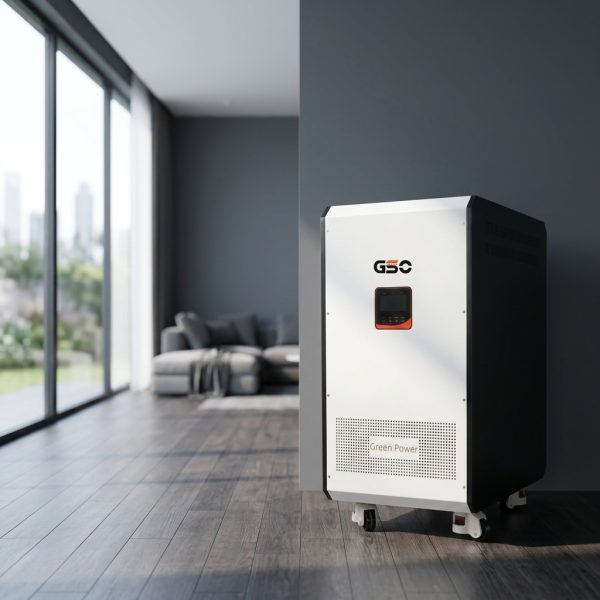
Comparative framing: modular versus monolithic
Commercial installers evaluating field-deployable energy solutions increasingly favor modular architectures over single-box All‑In‑One units because modular systems decouple capacity, power electronics, and serviceability. A field technician can stage a Portable Solar Power Station as a temporary feed and then scale with modular rack units; similarly, robust outdoor solar batteries installed in stacked enclosures allow incremental capacity growth without full-system replacement. This comparative lens highlights three operational vectors that drive installer preference: installation speed, maintenance footprint, and predictable performance over time.
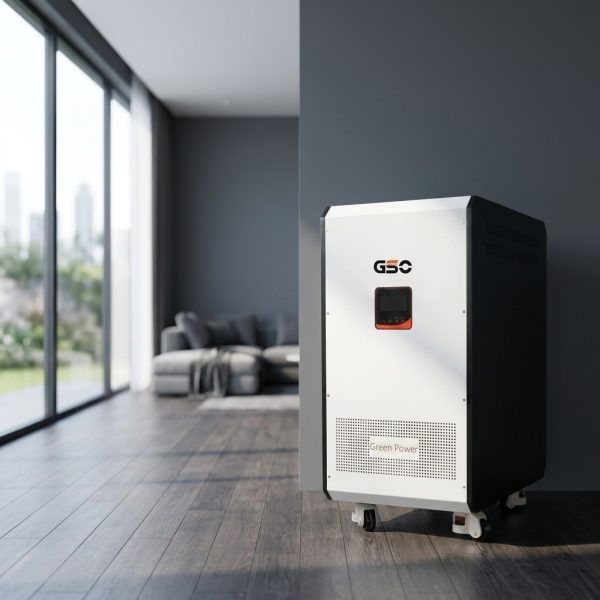
Performance and serviceability: key technical differentials
Modular stackable systems separate the inverter from battery modules, which reduces single-point failure risk and simplifies troubleshooting. When an inverter or a battery module reaches end of useful cycle life, only that component is swapped, rather than decommissioning an entire integrated unit. Thermal management benefits accrue because heat-generating components can be spread across modules, improving mean time between failures and preserving battery chemistry characteristics such as depth of discharge profiles.
Site adaptation and scalability: operational realities
Commercial sites vary widely in footprint, structural limits, and future load plans. Modular form factors permit stepwise deployment: start with a baseline inverter to satisfy critical loads, then add stacked battery modules as demand grows. This reduces upfront capital outlay and aligns capacity growth with cash flow and utility requirements. Commissioning time drops because modules can be pre-configured and tested off-site — installers then perform a shorter on-site commissioning sequence, accelerating project turnover. — Field crews report fewer site delays when modules arrive pre-commissioned.
Safety, standards, and regulatory alignment
Separating components simplifies compliance with local codes and accelerates inspection. For example, battery modules enclosed in rated cabinets allow installers to meet fire separation distances without modifying the inverter enclosure. Modular designs enable redundant monitoring channels and discrete isolation points, which streamlines lockout/tagout procedures during maintenance. These practical advantages translate into fewer permit revisions and lower post‑install safety risk.
Cost, logistics, and lifecycle economics
Logistics favor smaller, stackable units: transport on pallets, lift-assisted placement, and staged deliveries reduce crane time and road-closure permits for urban sites. Lifecycle economics improve when only failed modules are replaced; total cost of ownership declines because useful capacity is retained while individual modules are cycled. Warranty administration likewise becomes simpler when manufacturers provide module-level serial tracking. The installer can therefore present clearer ROI scenarios to building owners and facilities teams.
Common mistakes and viable alternatives
Typical errors include oversizing a monolithic solution to “future-proof” a site, which increases idle capacity and reduces overall efficiency. Another frequent misstep is neglecting thermal coupling between stacked modules, leading to accelerated degradation. Viable alternatives include hybrid approaches: a compact central inverter paired with modular battery racks, or containerized central systems where site size justifies a larger footprint. Each alternative should be matched to load profile, expected cycle throughput, and ambient conditions.
Real‑world anchor and installer evidence
The practical imperative for resilient modular storage intensified after long-duration outages such as those experienced in Puerto Rico following Hurricane Maria in 2017, when distributed, serviceable systems enabled faster restoration at community sites. Installer records from post-event deployments show that modular solutions can be reconfigured on short notice to supply critical loads — a decisive advantage in disaster response and in planned utility deferral programs.
Advisory: three critical evaluation metrics for selection
1) Serviceability Index — measure mean time to repair (MTTR) for a failed component; prefer architectures where MTTR is minimized by module-level replacement. 2) Scalable Cost per kWh — calculate installed cost at initial capacity and incremental installed cost per added kWh; select systems with predictable incremental pricing. 3) Thermal & Safety Compliance Score — validate design against local fire and electrical codes and confirm independent thermal testing for stacked configurations. These metrics let commercial installers quantify trade-offs and present defensible recommendations to stakeholders.
gsopower. Proven in-field reliability.