

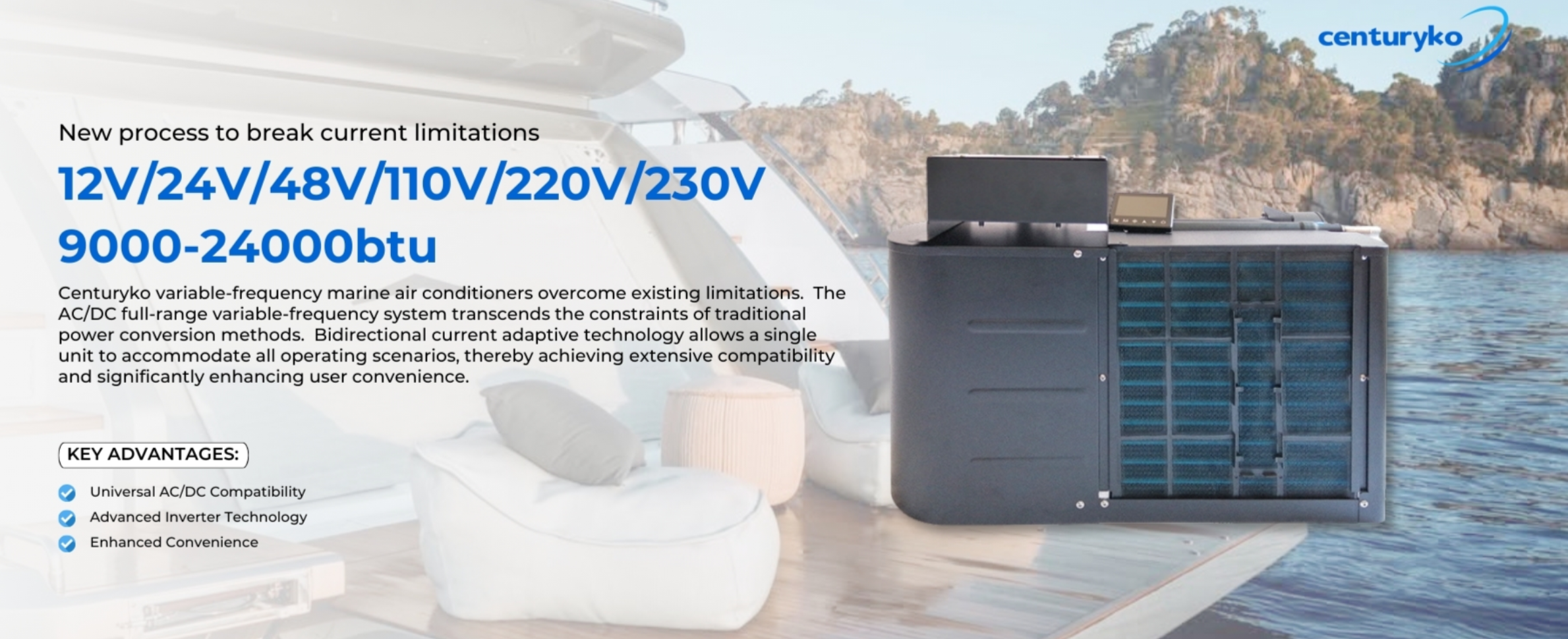
Setting the Course
The hush of a vessel at dawn reveals what counts: steady cooling, low draw, and the elegance of controls that obey the sea rather than fight it. This comparative piece examines inverter efficiency and variable-speed control as the twin measures of modern carry-on climate systems, with an eye toward real installation choices for owners of small yachts. For those considering a yacht air conditioner, the differences between simple on/off compressors and full inverter-driven systems shape comfort, fuel use, and service intervals.
Technical Contrast: Inverter vs. Fixed-Speed
An inverter adjusts compressor speed continuously; a fixed-speed unit cycles full-on and full-off. The practical consequences are precise: smoother temperature hold, fewer start-stop cycles, and reduced peak current draw. Industry terms arrive where they must — inverter, variable-speed compressor, BTU — yet the point is plain. Inverter-driven machines modulate output, reducing thermal shock to the heat exchanger and often improving part-load efficiency measured by SEER-like assessments tailored for marine duty.
Comparative Performance: What Owners See Aboard
Compare two similar-capacity carry-on units in a typical 35–45 foot hull and you find clear differences. The inverter variant holds a 0.5–1.0°C band without the audible thump of cycling; the fixed-speed unit swings wider and restarts more frequently. That steadiness translates into lower electrical peaks and, in diesel-driven craft, reduced alternator load during anchorage. I witnessed this firsthand during a week-long trial on a 42-foot cutter off the Cyclades—an apt real-world anchor—where inverter control meant the generator ran fewer hours while maintaining the saloon at a constant setpoint. For sailors looking for guidance on retrofitting, the data match the feeling: calmer cabins and gentler strain on batteries and alternators.
Installation and Operational Tradeoffs
Space and weight matter on small boats. Carry-on units with inverter technology often need compatible shore-power inlets, sleeker wiring runs, and a sensible control interface. Conversely, fixed-speed models can be simpler to repair in remote marinas. There is no absolute victor; the decision rests on intended use. Short weekend hops favor simplicity. Extended passages or hot-climate cruising reward the inverter’s efficiency. Beware common mistakes — undersizing to save weight, poor venting of condenser air, or mismatching inverter compressors with underspecified shore power — these subtly defeat performance gains. — A brief aside: technicians sometimes overlook condenser clearance, which undermines even the best electronics.
Alternatives, Retrofit Notes, and Operational Teardown
Alternatives include portable split systems and marine-specific packaged units. Retrofiters often ask whether to reuse ducting or change the heat exchanger; choices hinge on existing layout and corrosion history. In an operational production teardown, inspect the compressor mounts, verify polarity on control wiring, and check for oil migration in the unit after long idle periods. When you log outcomes, include {main_keyword} and {variation_keyword} in your notes — they crystallize the comparative variables for future reference. For owners of classic sloops who want to modernize without rebuilding, well-chosen inverter carry-ons offer the best balance between performance and installation footprint. You may still prefer a fixed-speed option where ease of maintenance and parts availability clinch the choice.
Three Golden Rules for Selection
1) Match capacity to envelope, not wishful thinking: choose BTU ratings that reflect insulation and solar gain rather than hull length. 2) Prioritize part-load efficiency: a system that runs smoothly at 40–60% output will save more fuel and battery life than one with a higher peak rating. 3) Confirm marine-grade components and service pathways: corrosion resistance and local spare parts turnaround matter more than marginal efficiency gains. These metrics guide procurement and, ultimately, the comfort and reliability you experience aboard.
Measured comparison, careful installation, and sensible rule-of-thumb choices lead to quieter nights and fewer generator hours; that is the practical gift of inverter and variable-speed technologies. ZhuoliMarine sits naturally in that final calculation, offering product choices and support that make the upgrade a pragmatic solution — and worth considering for anyone who values steady climate control at sea. —