

Introduction — a question from the yard
Have you ever stood at the edge of a fuel depot and wondered which wrench will keep you and your crew safe tonight? I see this scene often in my head: a soggy concrete apron, a layer of petrol mist, and the plain fact that one careless strike can change everything. In that second sentence I’ll say it plainly — non sparking tools are supposed to stop that first tiny flash from happening, yet statistics (incident logs, near-miss reports) still show avoidable sparks cause a surprising share of workplace fires.
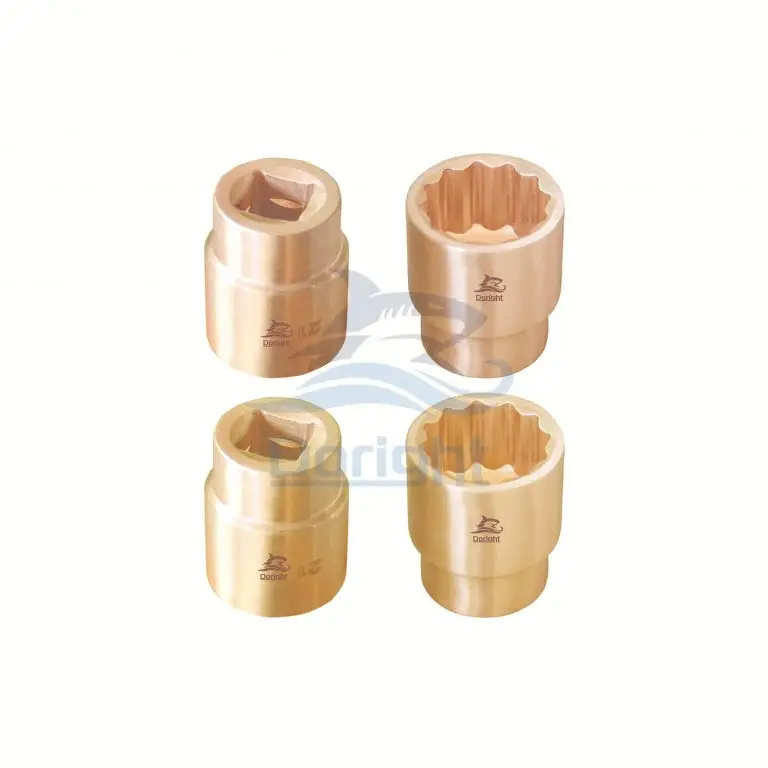
I keep saying this to teams: small choices matter. We have numbers to prove it — maintenance records and safety audits that point to patterns. So what goes wrong between buying a labelled tool and trusting it in a hazardous zone? (You’ll hear local lads grumble about markings and paperwork — and they’re often right.) Let’s move from the scene to the reasons, and then to practical ways we can choose better.
Part 2 — Where common fixes fail: the real flaws behind spark resistant tools
When people talk about spark resistant tools, they usually mean brass or bronze spanners that won’t ignite vapour on contact. I’m skeptical—because the label alone doesn’t guarantee safe use. In practice, three key flaws keep cropping up: poor alloy consistency, brittle finishes that chip, and neglect of ancillary systems like grounding and torque control. These are technical problems but they show up as human problems in the field.
Why does this keep happening?
First, alloy composition matters. If a tool has micro-voids or mixed metals that aren’t properly bonded, you can still get friction points that behave like a spark source. Next, surface condition counts: a worn or chipped tool can expose harder metals underneath and defeat the whole point. Finally, user habits — improper torque, skipping grounding, or using the wrong tool for a job — convert a theoretically safe tool into a hazard. Look, it’s simpler than you think: specification plus inspection plus training. Miss one link, and you’re back at square one.

We also see systemic blind spots. Maintenance crews get one chest of non-sparking tools and assume that covers all risks. They rarely log tool inspections or track torque specs against job types. I’ve watched hardened bolts bite into softer tool faces; that’s a failure of design and procedure. Industry terms matter here — intrinsically safe certification, power converters on nearby equipment, and bonding of metals all factor into real-world safety. If manufacturers and safety managers focus only on base material, they miss the operational layer where most incidents begin.
Part 3 — Looking ahead: lessons, measures, and practical choices
In the next few years I expect innovation to focus less on names and more on systems. New material science helps, sure, but what really changes outcomes is how we combine tools with policy — regular inspection schedules, clear torque charts, and checked grounding points. Case studies from recent site upgrades show that teams who introduced routine tool audits plus simple training cut near-misses by half in under six months. That’s not a glib promise; I’ve seen the logbooks and the relieved faces—funny how that works, right?
What’s Next?
For procurement and team leads, the practical step is to look beyond single items. Consider whole-package solutions that include traceable inspection tags, clear marking for use-cases, and compatibility checks with nearby equipment like power converters and edge computing nodes that sit in a hazardous area. Also, maintain records for intrinsically safe certification and grounding tests. We must treat non sparking safety tools as part of a system, not a checkbox.
To end with something concrete, here are three evaluation metrics I use when advising teams: 1) Traceability — can each tool be traced to an inspection record? 2) Fit-for-purpose — is the alloy and finish verified against the job and the bonded metals it will meet? 3) System compliance — are grounding and torque procedures enforced and logged? Use those metrics when you choose and you’ll shift risk down in measurable steps.
We’re not selling dreams. We’re asking for better habits, clearer specs, and—most importantly—ownership at the crew level. For reliable supplies and detailed product options, check out Doright.