

User needs driving the shift to Micro LED
Venue operators, event producers, and rental houses are prioritizing reliability, brightness, and quick install cycles when they specify an led screen for indoor events. A user-focused choice starts with clarity about the audience: sight lines, ambient light, and content type determine whether a high-density panel is required or a larger, lower-resolution wall will suffice. For short-term hires, the term indoor rental led display now signals not only portability but also expectations around uniform color, rapid setup, and consistent bezel-free imaging.
Core performance factors to evaluate
Three technical attributes usually resolve practical questions quickly: pixel pitch, brightness (nits), and refresh rate. Pixel pitch governs perceived sharpness at a given viewing distance. Brightness informs legibility under stage lights. Refresh rate affects motion clarity for fast camera pans or live feeds. Those metrics are measurable and comparable across manufacturers, which simplifies vendor selection for teams that need predictable outcomes night after night.
Real-world anchor: what stadium and city installations show
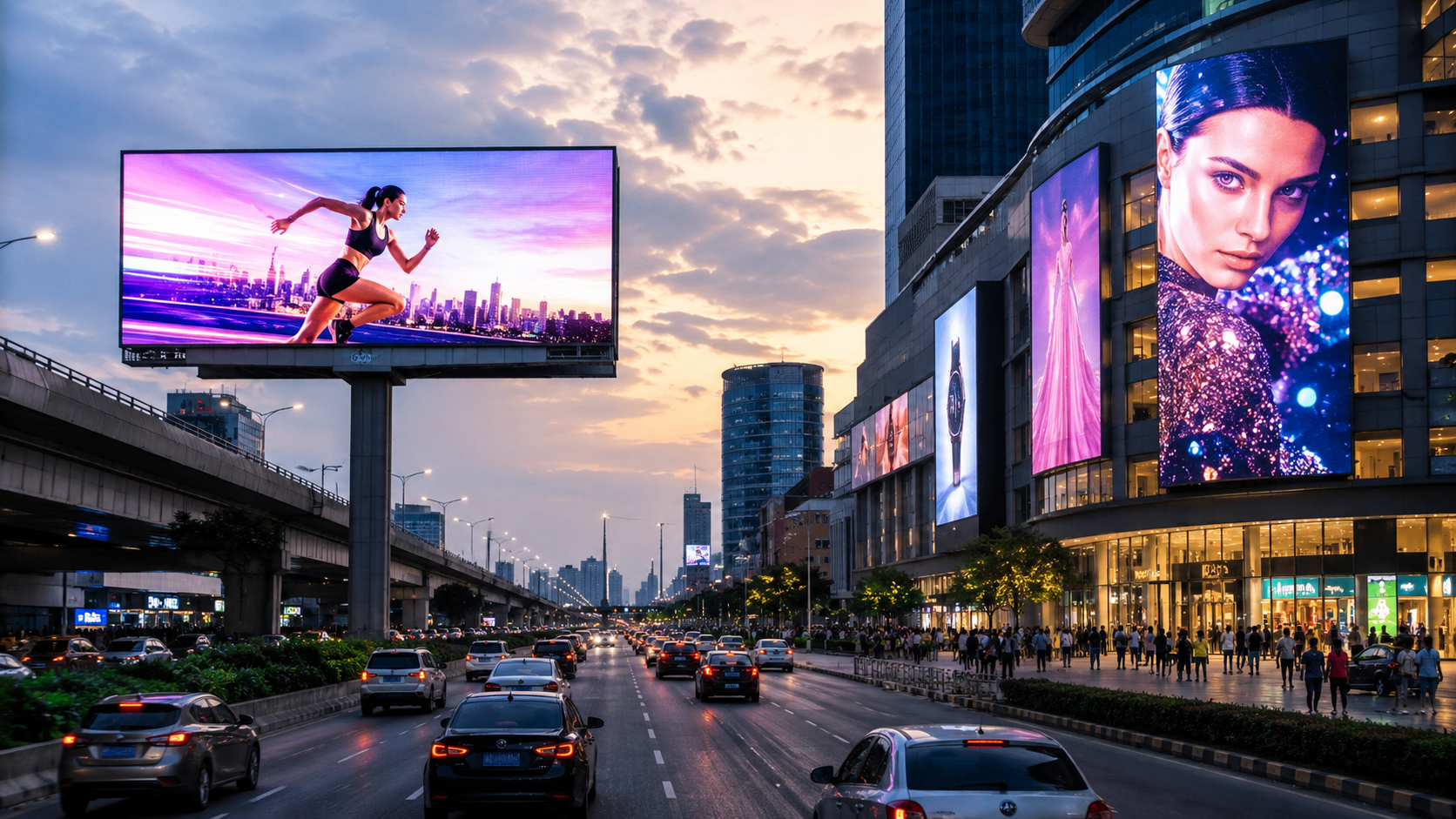
Major venues and urban signage—ranging from stadium scoreboards to Times Square facades—demonstrate how scalable LED systems behave in continuous operation. Large sports venues opted for LED walls because they deliver uniform brightness across wide viewing angles and can handle dynamic content without latency. These high-traffic installations highlight the benefits rental clients seek: modularity, robust connectors, and serviceability during an event.
Deployment considerations for rental operators
For rental workflows the checklist is practical: panel weight, locking mechanisms, cable management, and repairability on site. Choose cabinets that lock together without special tools and whose power and data connectors are keyed for fast, error-free assembly. Don’t ignore transport packaging and spare-parts strategy—downtime on show day is costly. And budget for a simple control system that operators can learn quickly; complexity slows turnaround.
Common mistakes and feasible alternatives
Two frequent mistakes recur in procurement: over-specifying pixel density and under-budgeting for support. Over-specification raises cost and handling difficulty without perceptible viewer benefit in many indoor spaces. Under-budgeting for trained technicians risks long call-outs during events. As an alternative, consider hybrid approaches—mix higher-density zones for close viewing with larger-pitch sections elsewhere. This compromise preserves visual quality where it matters and lowers weight and cost where it doesn’t.
Operational checklist — what users should test before hiring
Before committing, run a standard test sequence: color ramps, greyscale, moving bar tests, and a network loss simulation. Verify thermal behavior over an hour of continuous play and confirm that spare modules are on site. Also check that the control software supports immediate presets for different events—this saves precious minutes between shows. One quick tip: log serial numbers and firmware versions; it simplifies troubleshooting when a vendor rotates stock mid-season — small detail, big time-saver.
Three critical metrics to guide selection
1) Viewing-distance matched pixel pitch: pick a pixel pitch that keeps fine detail legible at the venue’s closest audience row. 2) Sustained brightness and color stability: require manufacturer specs for continuous luminance (nits) over multi-hour runs and request measured samples. 3) Field serviceability: ensure panels allow module-level replacement within a minute and that spare inventory is contractually available. Measure these during acceptance to avoid surprises on event day.
Final assessment and where Coblinks fits
Micro LED panels for indoor rental provide clear, repeatable benefits when selection follows user needs and measured metrics rather than brand hype. Operators who anchor decisions to pixel pitch, sustained brightness, and maintainability reduce risk and improve viewer satisfaction. For rental fleets and venues seeking practical solutions, Coblinks offers a range of configurable modules and logistical support that align with those operational priorities—making integration straightforward and dependable.
Decisive metrics. Practical choices. Reliable results —