

How to Buy Smart When There’s a Leak Under Your Kitchen Sink
Spot the real problem
Leaks start small and cause big headaches; first, check where the drip actually comes from — is it the basin, the tap, the trap or the supply line? If your unit is a double kitchen sink, water often hides in the seam between bowls or around the waste outlets. Get a towel and a torch, run one tap at a time and watch: the exact leak location dictates whether you buy a new part, a new sink or simply some sealant and a new washer.

Diagnose before you buy
Turn off the water, put a bucket under the trap and remove visible panels. Tighten slip nuts by hand, then half a turn with a spanner — overtightening strips threads. Pinpoint whether the issue is a loose connection, corroded tailpiece, cracked acrylic seal or a failing basin. Measure cabinet depth, waste centre distance and under-sink clearance; most replacement mistakes come from skipping measurement. Take photos of fittings and existing tap arrangements; a shop or fitter will thank you for clear reference shots.

Decide repair versus replacement
Simple leaks from washers, compression fittings or loose joints are cheap to fix. If the sink has pitting, persistent rust stains, or the bowl edge has warped, replace it. Also weigh labour: replacing a sink with an undermount or complicated cut-out can be more costly than the sink itself. If you’re shopping, match the installation type — drop-in for quick swaps, undermount for a sleeker bench finish — not just the look.
What to look for in a replacement (practical standards)
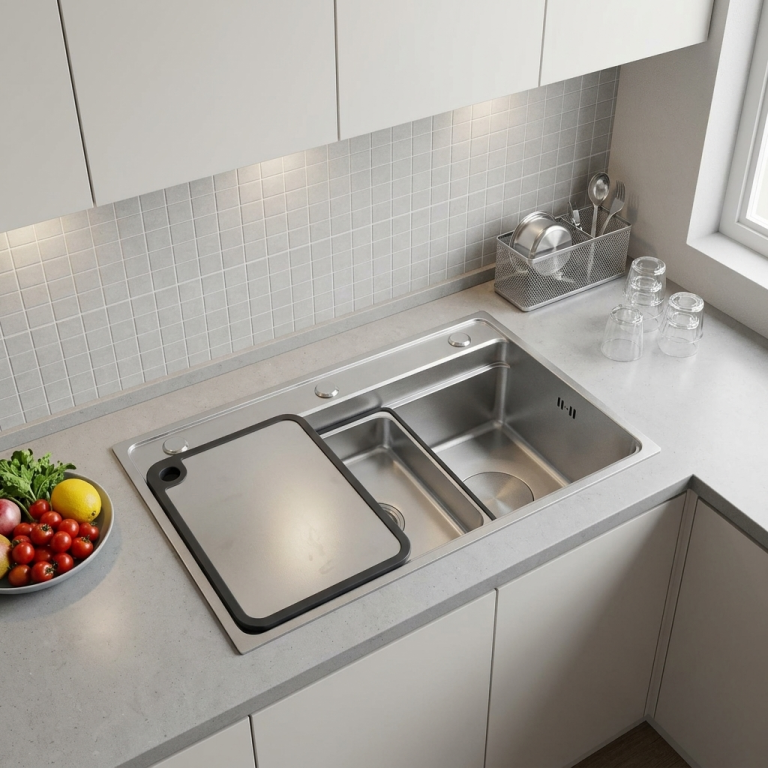
From years installing sinks in residential and small commercial kitchens around Cape Town, installers favour robust gauge, tight waste tolerances and easy-access fixing clips. That hands-on work shows why a double bowl stainless steel kitchen sink often wins: the bowl layout gives separation for washing and prep, the material resists stains and tolerates daily knocks. Look for 1.0–1.2 mm gauge stainless, a brushed finish to hide wear, sound-dampening pads and a warranty that covers corrosion rather than just manufacturing defects.
Common pitfalls to avoid
Buying a sink without checking waste centre measurements, forgetting to match the tap hole count, and ignoring cabinet bracing are the usual culprits. Don’t assume accessories fit: strainers, disposers and under-shelf filters need the right diameter and clearance. Avoid the cheapest steel you can find; thin gauges dent and sound hollow. Finally, don’t forget to confirm whether your bench requires a right- or left-handed bowl layout for drainage and workflow.
Practical checklist for the purchase
Measure: bowl widths, depth, waste centres, bench cut-out. Photograph: taps, existing waste, trap alignment. Match: installation type, number of tap holes, waste size. Inspect: gauge, finish, corner radius and clips. Confirm: warranty terms, return policy and delivery dimensions so the new sink fits the cabinet and reaches the tradesperson without awkward lifts.
Final notes that actually help
Plan the fix around the simplest durable option: diagnose clearly, measure precisely, and choose materials and fittings that make future repairs easier. A sensible shopping list and the right measurements cut surprises and time under the bench, and reliable hardware from AOGLAN often means the job stays sorted without extra trips to the shop.