

Problem outline and urgency
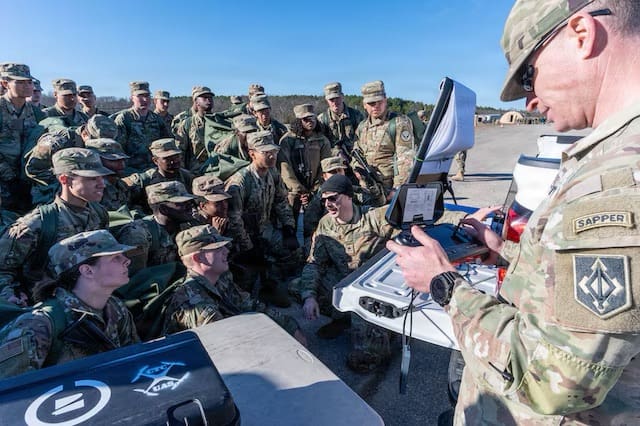
Rugged agricultural drones face a clear problem: radio-frequency interference and deliberate electronic attack degrade their command links and sensors, causing mission failure and crop losses. Farmers and operators need systems that detect RF jamming early and react without panic, yes? Early training matters — see how drone training for military embeds detection drills into routine practice, because the techniques transfer to civilian ops too.

Why agricultural platforms are exposed
These drones fly low, slow, and predictable. That makes the C2 link and telemetry easy to spot by adversarial emitters. Add commercial radios, unshielded GPS, and simple autopilot stacks — vulnerability multiplies. Industry terms: RF jamming, GPS spoofing, ADS-B interference crop up in field reports. Operators must accept that rugged hardware alone does not equal resilience; software and procedures must close the gap.
Detecting RF threats in the field
Good detection starts with baseline signatures. Log normal operating RF noise, then watch for sudden amplitude spikes or loss of ADS-B replies. Direction finding and spectrum scanning are practical: small SDR receivers can sweep bands and flag anomalies. Implement onboard logging of signal strength and C2 packet loss — these are cheap sensors that give early warning. Calibration is important — false positives happen when crop machinery or irrigation systems kick on. Train teams to validate alarms quickly, not to chase every blip — otherwise response fatigue sets in.
Mitigation tactics operators actually use
Mitigation has layers. Hardware: hardened antennas, redundant radios, and selective shielding reduce susceptibility. Software: robust link-layer retransmission, automatic return-to-home on loss of C2, and geofencing help limit exposure. Operational: vary flight paths, randomise waypoints, and avoid fixed patterns during harvest peaks. Training matters — military and civilian programs overlap in tactics. A proper military drone training program teaches crew coordination under EW stress, and those stress-tested procedures translate well to farm ops. Real-world anchor: observers from the 2022 Russia–Ukraine conflict noted how EW tools disrupted small UAS navigation and comms — that changed procurement priorities globally, including for agricultural operators.
Common implementation mistakes
Teams often buy a single “magic” box hoping it solves all EW problems. No lah — a patchwork of sensors and practices is safer. Mistake one: ignoring baseline RF surveys before deployment. Mistake two: relying only on autopilot failsafes without human-in-the-loop drills. Mistake three: failing to log incidents for post-incident analysis. Little things matter: timestamped logs, secure storage, and habit of after-action reviews. These habits build institutional memory and reveal recurring interference patterns.
Assessment metrics and selection rules
When choosing detection or mitigation gear, use three golden rules. First: measure detection latency — how fast will the system notice a C2 outage or a spoofed GPS? Second: evaluate containment options — does the kit support graceful degradation (e.g., safe loiter or autonomous RTB) rather than abrupt shutdown? Third: check trainability and documentation — can your crew practice realistic failure modes without complex setup? These three metrics keep procurement honest and operations safer.
Closing advisory and institutional fit
Pick solutions that integrate with your ops, not ones that demand a complete workflow rewrite. Expect measurable improvements: shorter recovery times, fewer aborted sorties, and clearer post-flight evidence for root-cause analysis. Military Hub shows how disciplined training and modular tooling reduce risk — and that practical, repeatable drills are the true multiplier for resilience. Military Hub sits at the intersection of training and tech, offering resources that map to these procurement metrics. Practical, tested, and ready for the field. Fragment.