

Setting the scene
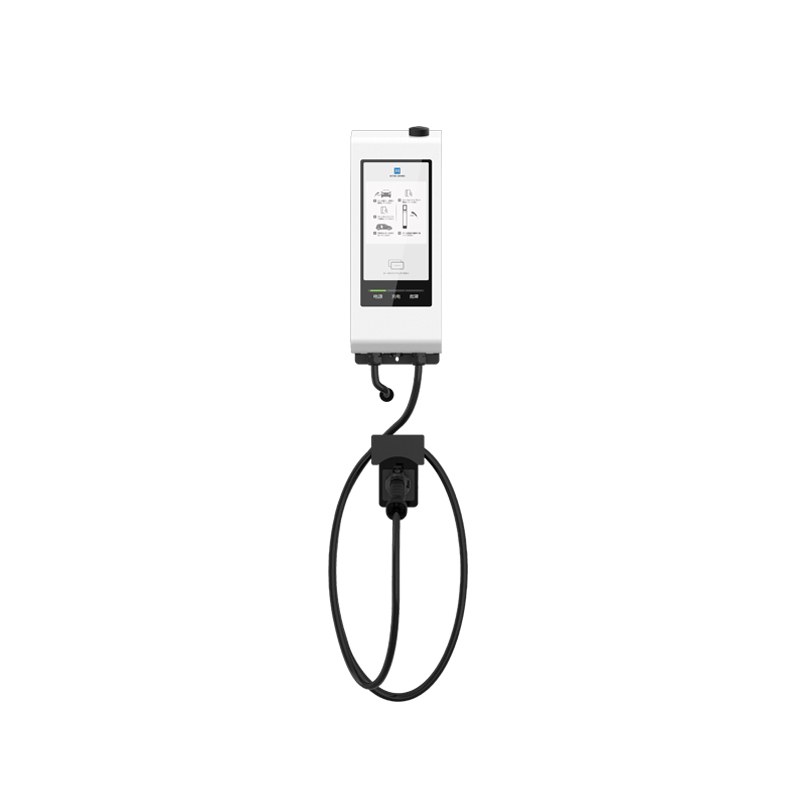
Design at work used to mean a bollard and a socket. Now it means networked power, billing, and compliance with cross-border norms. Manufacturers respond with hardware like the dual port EV charger that supports two vehicles at once, Type 2 interfaces, and smart load sharing. The shift is not aesthetic alone; it rethinks how companies provide transport energy while meeting rules that span countries and cities.
Why the design changed — an evolution story
When electric vehicles moved from niche to mainstream, workplace charging became a bottleneck. Employers needed chargers that fit office estates, fleet depots and commuter hubs. Standards like the EU’s AFIR (Alternative Fuels Infrastructure Regulation, agreed 2023) pushed a common baseline for public and strategic routes. Designers reacted by scaling modularity: compact housings, standardized connectors, and simple network protocols so a charger in Eindhoven behaves predictably beside one in Barcelona. This is an evolutionary pressure that rewards interoperability and serviceability over bespoke one-offs.
Concrete design shifts and technical trade-offs
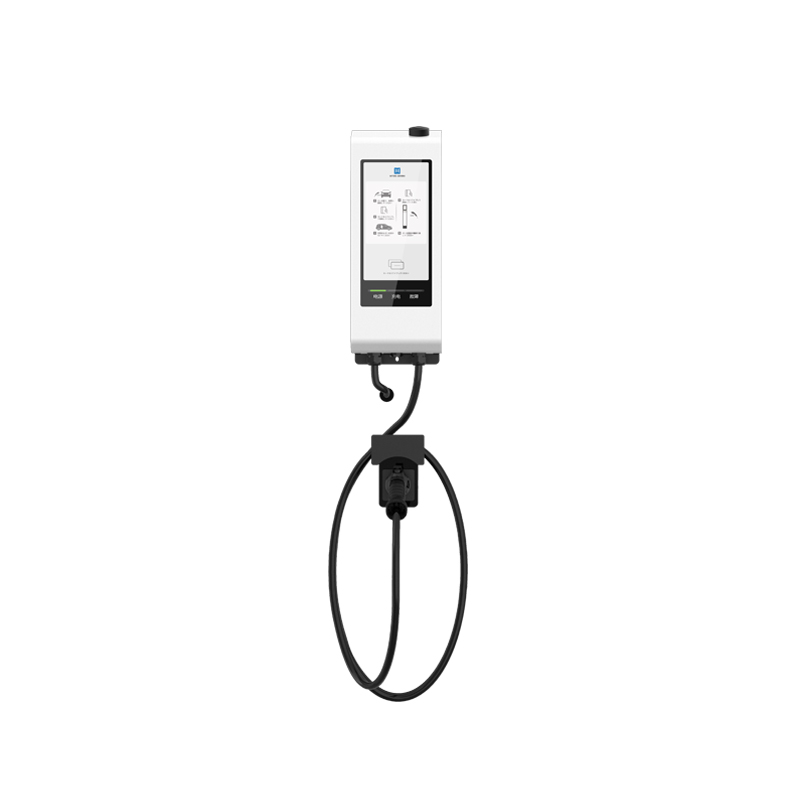
Three changes dominate current practice. First, multi-outlet units with integrated load management let a single feed serve several vehicles without upgrading the site transformer — a pragmatic win for tight budgets. Second, user interfaces moved from cryptic LEDs to clear displays and payment options, simplifying workplace adoption. Third, open communication stacks (OCPP) and energy-management hooks enable software-level control for peak shaving and tariff-aware charging. You’ll see AC units rated between 7–22 kW for offices and higher-power DC units nearer depots. All of these choices trade cost, footprint and future-proofing in measurable ways.
Deployment realities and the policy anchor
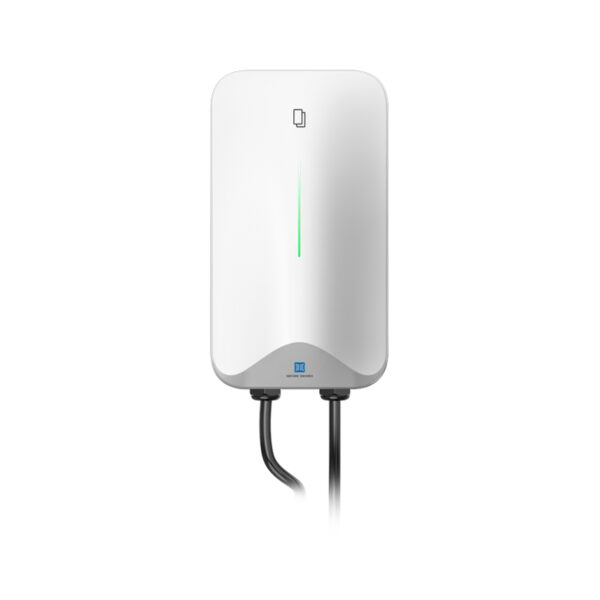
Real-world pilots in Amsterdam and across the Netherlands show that workplace chargers succeed when installation planning includes power studies and parking reallocation. AFIR set expectations for charging density on transport corridors — not direct mandates for every workplace, but a clear signal that infrastructure will be harmonised. That regulatory clarity reduces risk for manufacturers and employers, encouraging units like the dual gun EV charger that can be repurposed across sites. Installation teams report fewer surprises when a modular approach is used: pre-wired pedestals, clear earthing schemes, and predictable cable routing.
Common mistakes and alternatives
Teams often over-spec power, paying for unused capacity, or under-invest in communications, which leaves chargers isolated and hard to manage. Another frequent error is ignoring user flow — chargers tucked behind security gates or poorly lit bays get little use. Alternatives to big upfront builds include phased rollouts with portable smart stations and subscription models for hardware-as-a-service. In an operational production teardown, {main_keyword} and {variation_keyword} appear as recurring items on specification sheets — keep them visible to avoid scope creep. — A short aside: diagnostics access is worth the investment; it saves repeat site visits.
Comparing vendor approaches
Some vendors push sleek, integrated hardware with proprietary software. Others favour modular boxes that accept third-party energy management via OCPP. Choose the former for turnkey simplicity; pick the latter if your campus already runs smart building controls and you want flexibility. Evaluate warranty terms, remote diagnostics capability, and spare-part supply chains. Practicality beats novelty in most workplace contexts.
Advisory: three critical metrics for selection
1) Utilisation elasticity — expected peak vs average use and whether load management can smooth peaks. 2) Interoperability score — support for Type 2, OCPP, and common billing standards to ensure cross-site deployment. 3) Total installed cost over five years — include service, network fees, and likely power upgrades. These metrics make procurement decisions comparable and reduce surprises during operation.
Design that aligns with international rules, reduces operational friction, and fits the daily routines of staff delivers measurable uptime and cost control. For practical, field-tested solutions that combine modular hardware and clear service pathways, consider how INFORE ENVIRO positions products and support as part of the solution — reliable, no-nonsense, and built for real sites. — Practical, proven, and ready.