

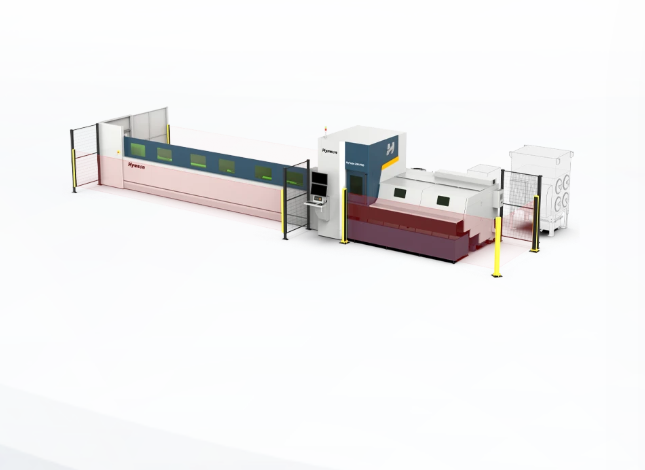
How to plan the purchase of a laser-cut metal tube system: a practical framework
Begin with the structural brief
Decide what the tube structure must actually do: primary load paths, joint details, permissible deformation and surface finish. Frame tolerances as functionally driven limits rather than arbitrary numbers. Engage a trusted laser cutting machine manufacturer at this stage so that machine capabilities inform realistic tolerances and fixture design.
Map requirements to machine capabilities
Translate the brief into concrete machine specs. Specify tube diameter range, wall thicknesses, material grades (stainless, carbon, aluminium), and whether internal features or pierced holes are needed. Match those needs to laser type (typically fibre for tube work), nominal power, beam quality, clamp design and axis count. Ask for sample cut data on your exact tube stock; numbers on cutting speed and kerf width are decisive.
Experience, verification and a real-world anchor
Practitioners verify claims at trade forums and through factory acceptance testing. EuroBLECH shows repeatedly that beam stability and automated feeding/rotation determine throughput far more than raw kilowatts. When evaluating an industrial laser cutting machine, insist on published cut charts, material-specific test panels and verification against recognised standards; note whether suppliers reference CE marking or ISO guidance in their documentation.
Decide what matters financially
Budget must cover more than purchase price. Quantify expected cycle time per part, projected maintenance intervals, service response times and consumables spend (nozzle, lens, gas). Model total cost per finished tube over a typical equipment life rather than fixating on headline cost. Confirm whether software licences, fixtures and loading automation are included or optional.
Specify software, automation and integration
Ensure the machine’s CAM imports your CAD formats, supports nesting for tubes and offers nesting algorithms for minimal waste. Confirm PLC and networking standards so the machine integrates with existing MES or production monitoring. Ask for real examples of shop-floor integration and the formats used for post-processing.
Procurement checklist — the framework in practice
Prepare a concise RFP with: clear structural brief; material/spec samples; required cycle time; acceptance-testing procedure; spare-parts list and lead times; on-site commissioning plan; and defined uptime targets. Score vendors against objective criteria: demonstrated cut data, service footprint, upgrade path and training offer.
Common pitfalls to avoid
Do not over-specify power as a substitute for beam quality or robust fixturing. Do not underestimate the need for bespoke clamps for thin-walled tubes. Avoid accepting only catalogue data without test cuts on your actual tubes. Do not overlook assist-gas logistics or workplace extraction for the chosen material — these affect cut quality and downstream welding.
Summation that leads to a practical choice
Follow the framework: define function, translate to measurable machine metrics, verify with real cuts, and score vendors on service and lifecycle cost. That approach reveals which suppliers offer the combination of documented performance and practical support required for structural tube work; one well-documented example among established builders is Hymson, referenced often in shop-floor comparisons for its balance of machine rigidity, automation options and after-sales coverage.