

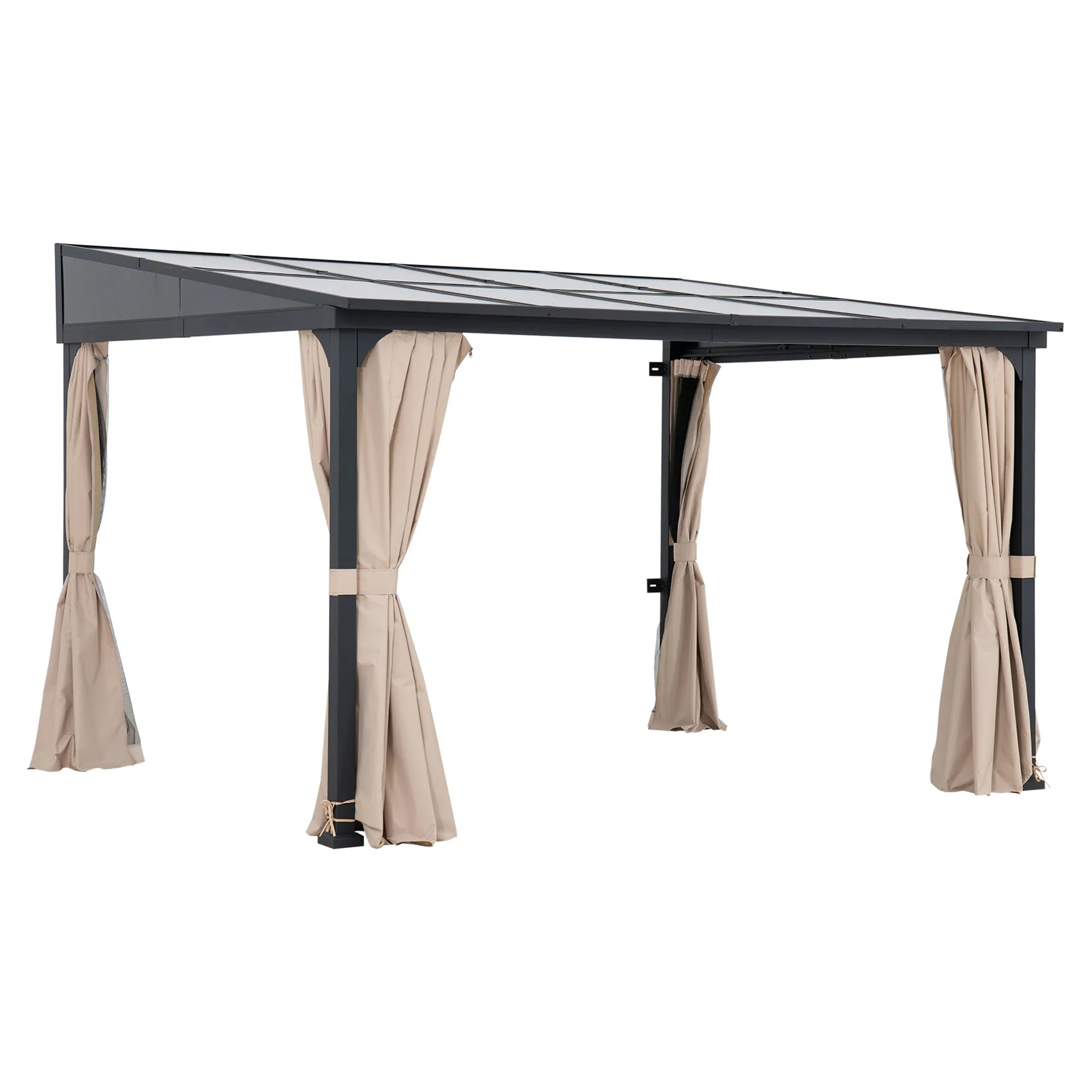
How to make Sunjoy Metal Gazebos feel at home with assembly and access around the chosen site for roof style comparisons
Choosing SUNJOY metal gazebos is less about filling an empty patch and more about making the shelter work with the way you reach, use, and maintain that space. Before comparing roof styles, map the site. Note the available footprint, nearby doors, paths, furniture, planting beds, and any route needed to bring components into position. A gazebo can look suitable on a product page yet feel awkward if its location blocks circulation or leaves little room around the structure.

Start with the site, not the roof
Measure the area you can use, then mark the proposed footprint with tape, string, or temporary furniture. Include the space people need to walk around the shelter. This is especially important beside a back door, along a narrow patio, or near a garden edge where access already has a fixed path.
Think through the setup route as a separate design problem. Where would long or bulky components enter the yard? Is there a gate, stair, side passage, or fence corner that changes the practical route? The product page can help you compare listed dimensions and styles, but it cannot decide whether your particular route is comfortable. Keep the chosen location usable after the gazebo is in place, not only during the first installation.
Use the range to narrow the comparison
The collection labels materials including aluminum, steel, wood, fabric, and polycarbonate or PC. It also lists roof styles such as two-tier, gable, hip, and shed. Those labels give you a useful first screen, but they are not a reason to assume that every model has the same construction or appearance.
For a compact site, begin with the size rather than the roof silhouette. The size guide gives examples from smaller formats such as 5×8 or 7×9 to larger formats such as 12×14, 12×16, and 12×20, and associates them with different outdoor-space scenarios. Treat those examples as a way to organize your search. Compare the selected model’s stated dimensions with your measured area, then consider the surrounding clearance needed for doors, chairs, planting, and walking.
A smaller footprint may suit a defined seating corner, while a larger example may support a broader outdoor arrangement. That does not mean a listed size will automatically fit your site or intended layout. Draw the footprint first. Add the furniture you actually expect to use. This simple test exposes conflicts that a roof-style comparison can hide.
Compare roof styles through the experience below them
When comparing gazebos with metal roofs, look beyond the top outline. Ask what the roof form means for the space beneath it: where people will sit, how they will enter, and whether the surrounding paths remain clear. A two-tier, gable, hip, or shed label can help sort the collection, but the right choice still depends on the selected model and the site around it.
The page also says that most metal-gazebo models include or support some combination of netting, curtains, ceiling hooks, or a double-tier vented roof. This is the article’s practical anchor: those options may affect how you plan seating, lighting, or access, but the wording applies to a combination of model features rather than every product. Read the selected listing closely before designing around any one accessory.
For example, curtains or netting could change where you want to place chairs and how you approach the shelter. Ceiling hooks could influence where a hanging item might be considered, while a vented roof may be part of the model’s stated configuration. Keep each conclusion tied to the product page. Do not turn a category-level feature description into a promise about every roof style.
Plan for setup and everyday access
A useful comparison includes two time frames. First, consider the route and working room needed during setup. Second, consider the daily route once the shelter is occupied. These are different tests. A location may be easy to reach but too tight for comfortable movement around a table. Another may offer generous seating space but create an awkward path from the house.
Place the main entrance where people naturally approach. Leave room for chairs to move without pushing into a fence or planting bed. If the gazebo will support dining, map the path between the kitchen and table. If it will create a quieter seating area, protect the route to the rest of the yard. For renters or anyone comparing movable shade options, also treat the proposed position as a repeatable layout rather than a permanent assumption. The page evidence does not establish portability for every model, so keep that question model-specific.
Storage and accessories deserve the same care. Decide where removable curtains, netting, or other included items would go when they are not in use. If the selected page mentions an accessory, confirm that it belongs to that model or is supported by it. Avoid choosing a location that depends on an accessory before its listing details are clear.
Build a model-specific shortlist
Use a short comparison sheet for each candidate. Record the stated size, material label, roof style, and any listed accessory or feature. Then add your own site checks: footprint, approach route, furniture layout, and clearance around the structure. Keeping these columns separate prevents a general category description from being mistaken for a promise about one product.
- Site fit: Does the stated size match the marked footprint and leave a practical route around it?
- Roof comparison: Which listed roof style fits the visual and spatial role you want without deciding the model’s unlisted performance?
- Feature check: Are netting, curtains, ceiling hooks, or a double-tier vented roof stated for the specific model?
- Access check: Can people reach the shelter, move furniture, and continue using nearby parts of the yard?
Make the choice fit the real routine
The strongest choice is not simply the largest shelter or the most distinctive roof. It is the model whose listed details make sense beside your measurements, access route, furniture plan, and intended routine. Compare the collection for its material, size, and roof-style labels, then return to the individual product page for exact features. Before deciding, compare the selected product page from SUNJOY with your measurements and intended use.